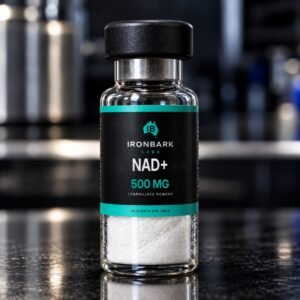
Mitochondrial & longevity
What is NAD+?
The cellular coenzyme at the centre of energy metabolism and sirtuin / PARP signalling research.
- Class
- Coenzyme (dinucleotide)
- Also known as
- Nicotinamide adenine dinucleotide
- Type
- Small molecule, not a peptide
- Research stage
- Widely studied; precursors in clinical trials
01 · Classification
What it is
NAD+ is a coenzyme found in every living cell. It carries electrons in energy metabolism and is also used up by several signalling enzymes.
Cellular NAD+ levels are reported to fall with age in many models, which has made it a central topic in ageing research.
02 · Mechanisms
What has been studied
- Redox reactions: shuttles electrons between NAD+ and NADH in glycolysis and the citric acid cycle.
- Sirtuins: NAD+-dependent deacetylases studied for roles in metabolism and ageing.
- PARPs and CD38: enzymes that consume NAD+ during DNA repair and immune signalling, and are studied as drivers of NAD+ decline.
03 · Evidence
Where the research is
Extensive basic research. Clinical work mostly uses precursors such as NR and NMN rather than NAD+ itself.
04 · Primary sources
Read the literature
Search the primary research record directly rather than relying on summaries, including this one.
Research use only
Supplied strictly for laboratory and educational research. Not a therapeutic good, not for human or veterinary use, and not evaluated by the TGA. This overview is not medical advice and gives no dosing or administration guidance.
