Ironbark Labs research
Research overviews.
What each compound is, which receptors and pathways it has been studied on, and how far the research has actually got. Written in plain English, linked to the primary literature, for laboratory and educational research.
- Primary literature
- Plain English
- Research use only · 18+
Find your compound.
View the COA libraryBrowse compounds A–Z
GLP-1 / incretin
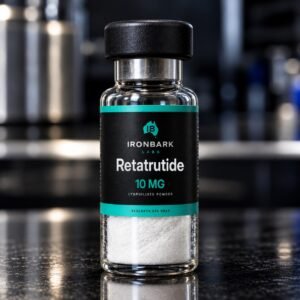
What is Retatrutide?
An investigational single peptide that activates three receptors at once: GIP, GLP-1 and glucagon. Code name LY3437943.
Read overview →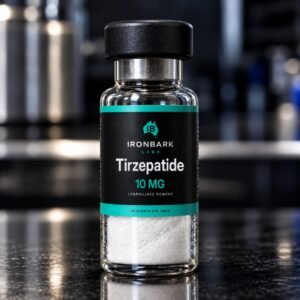
GLP-1 / incretin
What is Tirzepatide?
A dual GIP and GLP-1 receptor agonist (LY3298176). A reference compound for comparing dual and single incretin activity.
Read overview →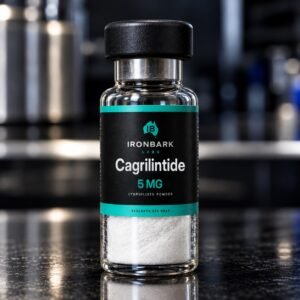
Amylin analogue
What is Cagrilintide?
A long-acting acylated amylin analogue (AM833), studied on its own and in combination with GLP-1 compounds.
Read overview →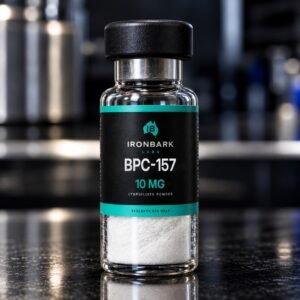
Tissue repair
What is BPC-157?
A synthetic 15-amino-acid peptide studied in preclinical tissue-repair and blood-vessel growth research.
Read overview →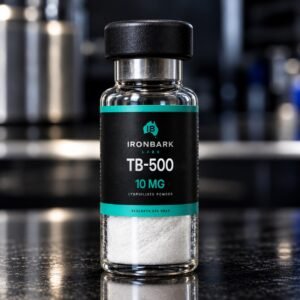
Tissue repair
What is TB-500?
A synthetic peptide related to thymosin beta-4, the main actin-binding protein studied in cell migration research.
Read overview →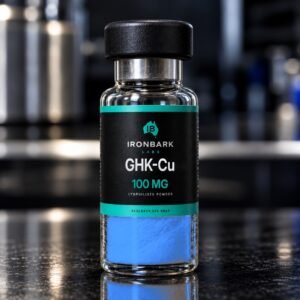
Copper peptide
What is GHK-Cu?
A naturally occurring copper-binding tripeptide studied in skin, wound and matrix-remodelling research.
Read overview →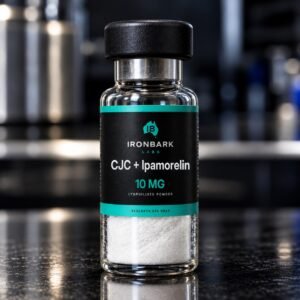
GH secretagogues
What is CJC-1295 + Ipamorelin?
A GHRH analogue paired with a selective ghrelin-receptor agonist, studied in growth-hormone axis research.
Read overview →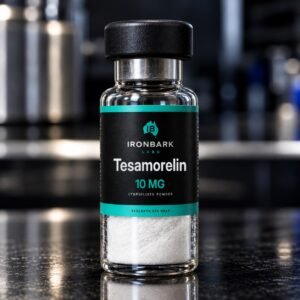
GHRH analogue
What is Tesamorelin?
A stabilised analogue of full-length growth-hormone-releasing hormone, studied in GH-axis and body-composition research.
Read overview →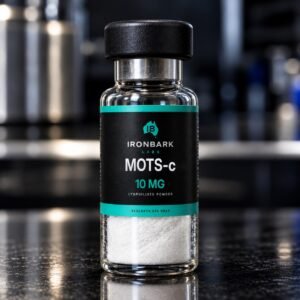
Mitochondrial
What is MOTS-c?
A 16-amino-acid peptide encoded in mitochondrial DNA, studied in metabolic and exercise-physiology research.
Read overview →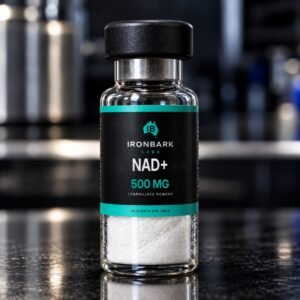
Mitochondrial & longevity
What is NAD+?
The cellular coenzyme at the centre of energy metabolism and sirtuin / PARP signalling research.
Read overview →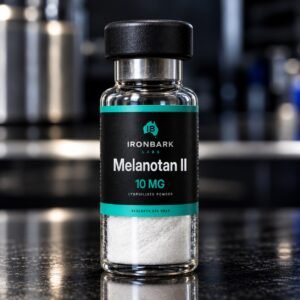
Melanocortin
What is Melanotan II?
A synthetic cyclic peptide that acts as a non-selective melanocortin receptor agonist.
Read overview →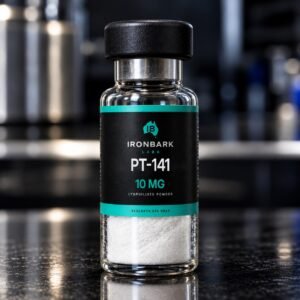
Melanocortin
What is PT-141?
Bremelanotide: a cyclic peptide studied as an agonist at the central melanocortin receptors MC3R and MC4R.
Read overview →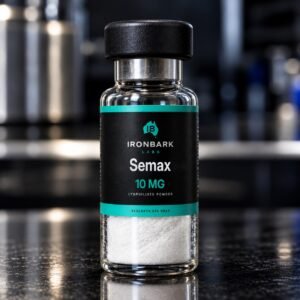
Neuropeptide
What is Semax?
A synthetic ACTH fragment analogue studied in neuropeptide and BDNF-signalling research.
Read overview →Catalogue
Browse all research compounds
The full catalogue. Every batch is independently tested and published with its certificate of analysis, and dispatched from within Australia.
Shop the catalogue →Our approach
How these overviews are written.
Short, plain-English summaries of the compounds we supply: what they are, what the literature has studied, and how strong that evidence is. Each overview links to the primary research so you can check it yourself.
Explore the overviews ↑Classification first
Every overview opens with what the compound is: its class, structure and other names, so you know exactly what you are reading about.
Source-led
Mechanism statements reflect the published literature, and each page links straight to PubMed for the primary record.
Evidence in context
We say whether findings come from cell, animal or human studies, and flag where data is thin or comes from a single group.
No dosing advice
Technical terms are explained, but we never give dosing, administration or treatment guidance.
These pages are short educational summaries, not systematic reviews. They are not medical advice and do not establish safety, effectiveness or any approved use.
