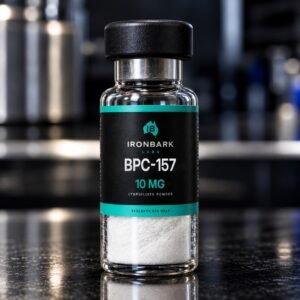
Tissue repair
What is BPC-157?
A synthetic 15-amino-acid peptide studied in preclinical tissue-repair and blood-vessel growth research.
- Class
- Synthetic pentadecapeptide
- Also known as
- Body Protection Compound-157, PL 14736
- Type
- 15-amino-acid peptide
- Research stage
- Mostly preclinical (cell and animal models)
01 · Classification
What it is
BPC-157 is a 15-amino-acid synthetic peptide. Its sequence is a partial sequence of a larger protein originally isolated from gastric juice.
Unlike many peptides, it is reported to be stable in gastric acid, which is why it appears in gut-related research models as well as tendon, ligament and muscle models.
02 · Mechanisms
What has been studied
- Angiogenesis: studied for effects on new blood-vessel formation, including VEGFR2 signalling, in wound and injury models.
- Nitric oxide system: several studies examine its interaction with NO signalling and vascular tone.
- Fibroblast and tendon models: studied for effects on fibroblast migration and growth-factor receptor expression in tendon cell cultures.
03 · Evidence
Where the research is
Most of the published research is in rodents and cell cultures, and much of it comes from a small number of research groups. Controlled human data is very limited. Treat claims beyond the preclinical record with caution.
04 · Primary sources
Read the literature
Search the primary research record directly rather than relying on summaries, including this one.
Research use only
Supplied strictly for laboratory and educational research. Not a therapeutic good, not for human or veterinary use, and not evaluated by the TGA. This overview is not medical advice and gives no dosing or administration guidance.
