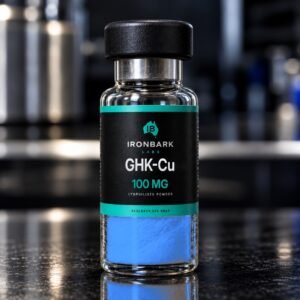
Copper peptide
What is GHK-Cu?
A naturally occurring copper-binding tripeptide studied in skin, wound and matrix-remodelling research.
- Class
- Copper-binding tripeptide
- Also known as
- Copper tripeptide-1, glycyl-L-histidyl-L-lysine copper
- Type
- Tripeptide–copper(II) complex
- Research stage
- Preclinical and cosmetic science
01 · Classification
What it is
GHK (glycine-histidine-lysine) is a tripeptide found naturally in human plasma, saliva and urine. It binds copper(II) ions very strongly, forming the GHK-Cu complex.
It is one of the most-studied peptides in skin and cosmetic science, where it appears in topical formulation research.
02 · Mechanisms
What has been studied
- Extracellular matrix: studied for effects on collagen, elastin and glycosaminoglycan synthesis in fibroblast cultures.
- Copper transport: researched as a carrier that delivers copper to cells in a controlled way.
- Gene expression: published bioinformatic work reports that it shifts expression of many genes linked to tissue repair, though this remains an area of interpretation.
03 · Evidence
Where the research is
Most data comes from cell cultures, animal wound models and topical cosmetic studies.
04 · Primary sources
Read the literature
Search the primary research record directly rather than relying on summaries, including this one.
Research use only
Supplied strictly for laboratory and educational research. Not a therapeutic good, not for human or veterinary use, and not evaluated by the TGA. This overview is not medical advice and gives no dosing or administration guidance.
